And how to keep them from coming back
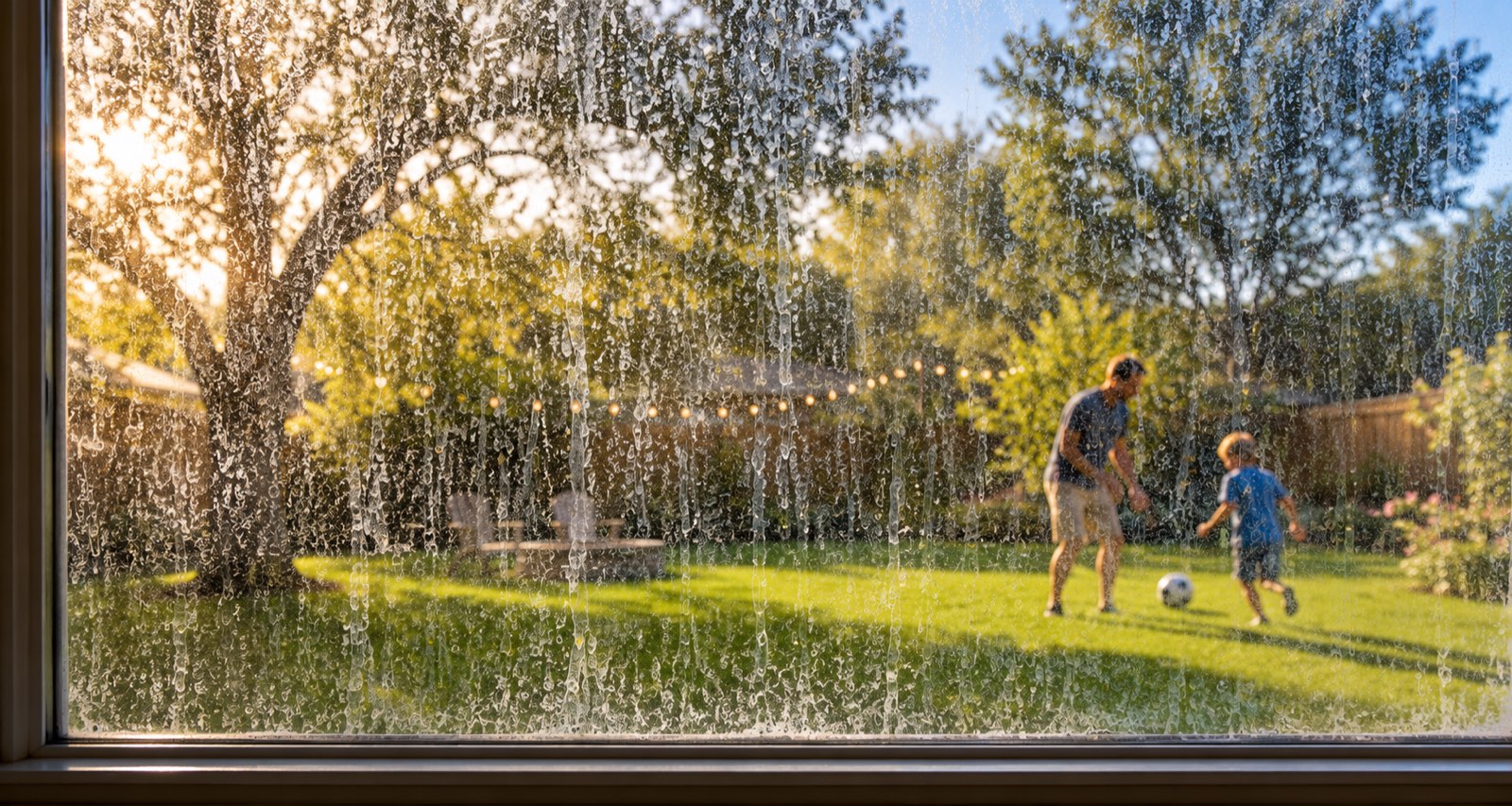
If you live in Central Texas and your windows have a cloudy, crusty, won't-wipe-off film on them, you're not doing anything wrong. You just have Austin water. And Austin water is hard.
At River Blue Services, we clean glass across Austin, Leander, Cedar Park, Round Rock, Georgetown, and out to the lake communities around Marble Falls and Horseshoe Bay. Hard water staining is one of the most common—and most misunderstood—problems we get called about. Here's exactly how we deal with it, what you can (and can't) fix yourself, and how to keep it from happening again.
Most tap water in our area runs around 250 TDS (total dissolved solids—the minerals like calcium and metals suspended in the water). For comparison, water that dries to a truly spot-free finish is under 15 TDS. If you're on a well, you may be sitting at 1,000+ TDS.
What that means in plain English: any tap or city water will leave deposits on your glass eventually. It starts invisibly. You won't see it for a while. Then it slowly builds, hazes over, and one day you realize you can't see clearly out your own window—and no amount of normal cleaning touches it.
Those white spots are mineral deposits, mostly calcium, baked onto the glass. Here in the Texas heat, they bond fast.
How serious is it? We once had a customer whose black steel-painted fence turned mostly white from sprinkler overspray. That same mineral load hits your windows every time the sprinklers run.
Before we get into products, here's the rule that explains all of it. To get anything off a window, you need two things:
What that "something" is depends on what the problem is:
That's why your glass cleaner does nothing against hard water. It's the wrong tool for the job. Dish soap can't dissolve a rock, and hard water deposits aren't grime—they're mineral scale bonded directly to the glass surface, so lifting them off takes mechanical work, not another spray bottle.
We deliberately keep chemicals out of this process. Acids can etch glass, corrode metal window frames, and give off fumes you don't want near your home—so instead we rely on graded abrasive pads and careful blade technique to physically remove the buildup without any of that risk.
Here's how we approach it on a real job
After a normal cleaning, we use fine bronze wool pads to see what comes off dry. Bronze wool is soft enough that it won't scratch glass, but abrasive enough to knock loose the top layer of light mineral buildup. Sometimes that's all it takes. Just as often, the deposits are well past this stage—which tells us we're moving to a heavier abrasive grade or blade work next.
If fine bronze wool doesn't fully clear the buildup, we move to a coarser grade of pad—still bronze wool, not steel, so we're not introducing rust risk or scratching the glass. We work it wet, in overlapping passes, letting the abrasive do the work gradually instead of forcing it. No chemicals, no acids, no fumes—just controlled mechanical pressure applied the right way.
We deliberately avoid acid-based descalers and muriatic acid entirely. They can etch the glass and corrode metal window frames, and muriatic acid gives off dangerous vapors that have no place near your home or your family. It's a shortcut we don't take, even when it would be faster.
For the heaviest, longest-baked-on deposits, we bring in a razor scraper as the final step—and we only ever push the blade forward. Dragging it backward across the glass traps grit under the blade and causes micro-scratches you'll see forever in the right light. This single technique mistake ruins more windows than the hard water stains ever do, which is why we treat it as a skill, not just a tool.
The most memorable jobs are the ones left too long. When buildup has been baking on for months or years, a single window can take 30 to 60 minutes to properly clean—which means higher cost to you, and even then the results may be disappointing if the glass is already etched.
There's a hidden cost too: the more buildup on a window, the more heat it traps, and the more likely that window is to fail. In some cases, the most cost-effective route honestly isn't cleaning at all—it's glass replacement. We'll tell you that straight, because the alternative is you paying us for an hour of scrubbing and still not being happy.
As Barney Fife would say: nip it in the bud.
Here's what separates a real fix from a temporary one: if you got hard water stains, you'll get them again unless you fix the cause. Cleaning the glass without addressing the source is just resetting the clock. The usual culprits in Austin homes:
People ask about glass coatings and sealants. Here's our honest opinion: we don't recommend coatings for almost any glass. The one exception is something like RainX on windows that sit directly under an AC condensate line, where the dripping is constant and you can't fully fix the source.
For everything else, the answer is simpler and cheaper: a thorough cleaning twice a year keeps your windows in great shape. We scrub every single time we clean, then dry every edge by hand with a clean rag so water can't pool and leave fresh deposits—which means buildup never gets the chance to bond and harden into the etched mess that costs real money to remove.
And these same tactics work in your shower, too — hard water builds up on shower glass and stone the very same way it does on your windows.
Want to tackle light buildup yourself? This is the one tool we trust on real jobs.
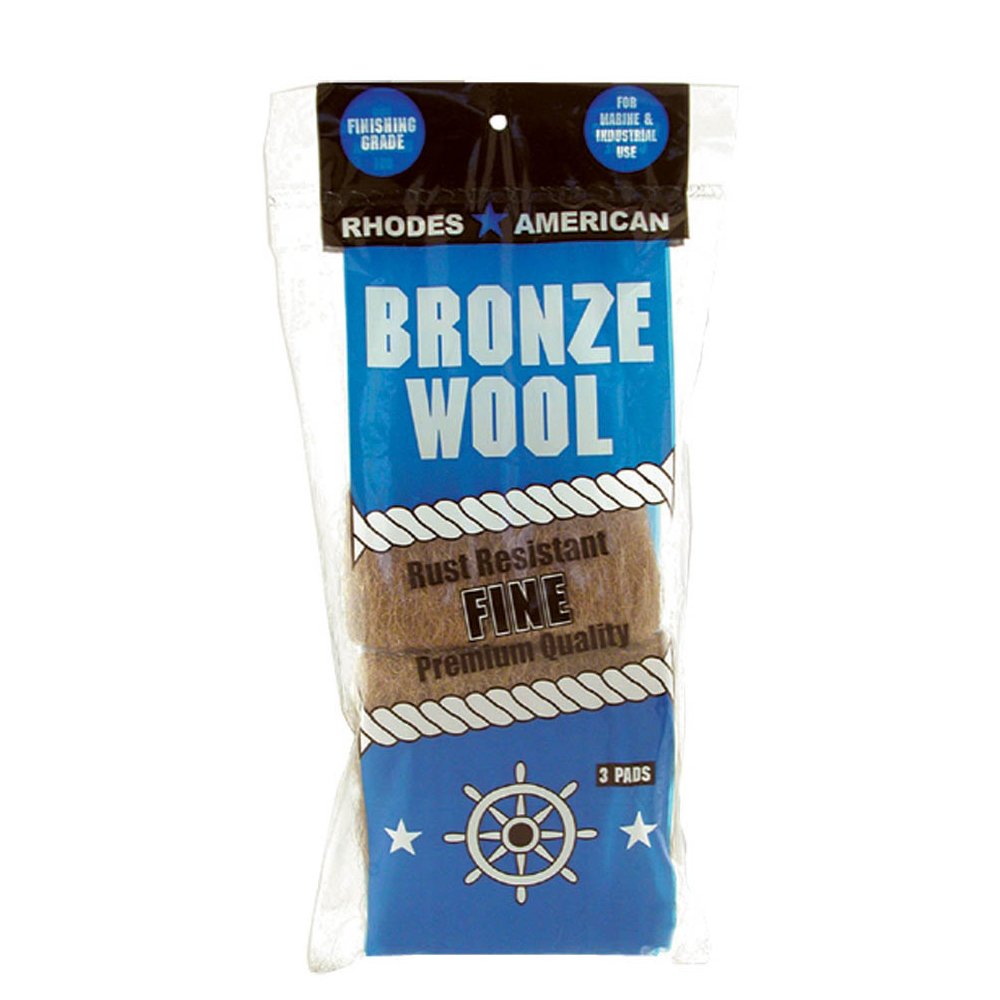
Our go-to for hard water, start to finish. Used wet or dry on already-clean glass, bronze wool lifts mineral buildup through controlled abrasion—no acid, no chemical descalers, no fumes. Start with a fine grade for light deposits, and step up to a coarser grade for heavier buildup, without the risk of the micro-scratches steel wool leaves behind or the etching a chemical descaler can cause on glass and metal frames.
Shop on Amazon(Amazon affiliate links—they support our free resources at no extra cost to you.)
If your windows are starting to haze and your glass cleaner isn't cutting it, don't wait. Hard water staining only gets harder—and more expensive—the longer it sits. Catch it early and a routine cleaning handles it. Let it go for a year and you might be looking at hours of heavy abrasive work or, in the worst cases, glass replacement.
We'll tell you honestly whether your glass needs a cleaning, a coating, or replacement—no upsell.